
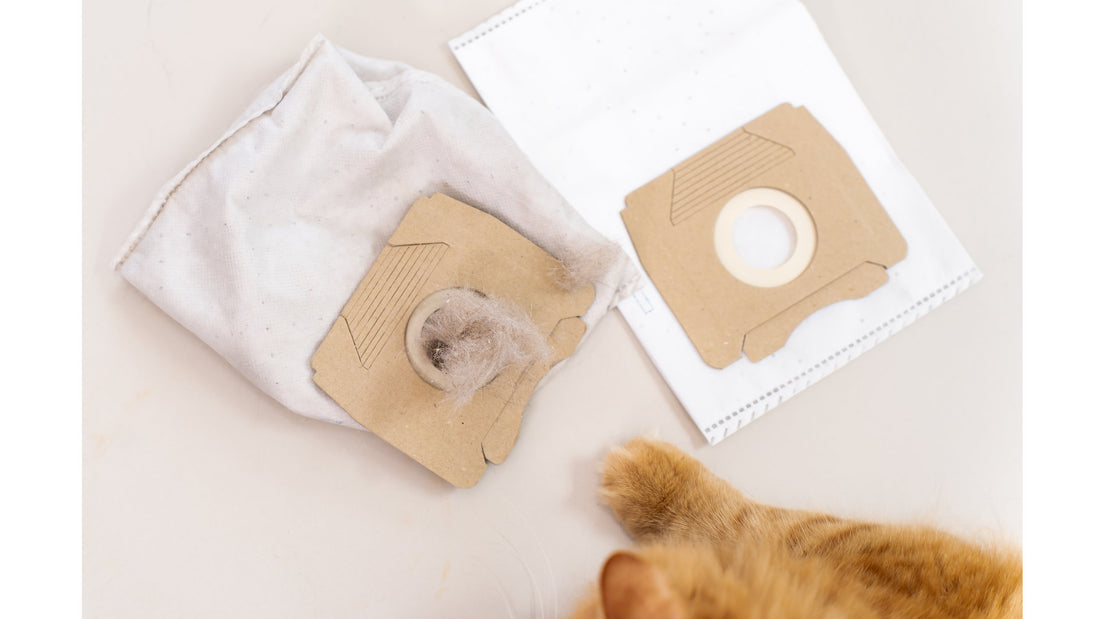
What actually is dust, and how does it form?
Dust is an accumulation of tiny particles that float in the air or settle on surfaces. These particles can come from various sources. Some of the main causes of dust in our homes are:
Skin flakes: People and pets continuously shed skin flakes. These tiny particles that come off our bodies contribute to the build-up of dust.
Textile fibres: Clothing, carpets and curtains can release fibres over time, which then collect as dust.
Pet dander and hair: Dead skin cells and hair from pets also contribute to the accumulation of dust.
Floors and floor coverings: As people walk and move around the house, tiny particles are abraded from shoes or wheels, which also contributes to the build-up of dust.
Outside air: Dust also gets into our homes from outside. Pollen, dirt or fine particulates can enter through open windows or doors and settle in the air or on surfaces.
What should you actually do first, vacuum or dust?
Do you sometimes face the question of whether to vacuum or dust first? This everyday decision can have a big influence on how efficiently you clean your home. Let's look at which order works best to get your home thoroughly and sparklingly clean.
Vacuuming or dusting: the optimal order
The answer may be surprising, but experts usually recommend vacuuming first and then dusting. Why? Vacuuming removes not only loose dirt particles and hair, but also fine dust that settles on surfaces. If you dust first, fine dust can fall onto the surfaces you have already cleaned while you vacuum afterwards, which means extra work.
Why vacuum first?
Vacuuming with an appliance suited to your different floor coverings is effective at picking up dirt and dust before you wipe surfaces with a duster or cleaning cloth. This stops areas you have already dusted from getting dirty again.
How can you prevent dust in your home?
Vacuuming and mopping regularly:
Living with house dust: dust is an everyday companion in our homes. To prevent it, vacuuming and mopping regularly is essential. Use high-quality vacuum cleaner bags and cleaning cloths to remove dust particles effectively.
Effective ventilation:
Everyday life and ventilation: air your home regularly to let fresh air in and at the same time carry moisture and dust particles out. Brief bursts of ventilation several times a day can help here.
Furniture and dust:
Make sure you wipe your furniture regularly, as it is a common source of dust particles. Microfibre cloths are best for removing the dust in your home effectively.
Avoiding sources of dust:
Reduce potential sources of dust, for example by replacing carpets with floor coverings that are easy to clean, or swapping curtains for low-maintenance alternatives.
Cleaning dust traps regularly:
Avoiding dust: clean dust traps such as lampshades, fans and radiators regularly, to stop dust collecting there and being spread around the room.
Minimising dust particles:
Reducing dust particles: invest in air purifiers with HEPA filters to reduce the amount of dust particles in the air and create a cleaner indoor climate.
Why is there so much dust under the bed?
Have you ever wondered why so much dust collects under your bed, even though you vacuum and mop the whole home regularly? It is a common phenomenon that puzzles many of us. Let's find out together why so many specks of dust collect there of all places, and what you can do about it.
Why does so much dust collect under the bed?
The nature of dust: Dust particles are tiny and light. They are not only carried by movements in the air, they can also end up under furniture such as beds, because air currents deposit them there.
Air circulation: There is often little air circulation under beds, which means dust collects there more readily than in well-ventilated places in the home.
Household activities: Our daily activities around the home contribute too. Movement while sleeping, clothing being shaken up, and dirt particles that cling to clothes and hair can all mean more dust ends up under beds.
How can you reduce the build-up of dust under the bed?
Balanced cleaning: Vacuum under the bed regularly too. Use suitable cleaning tools to remove the dust efficiently.
Dust-reducing measures: When cleaning under the bed, use a damp cloth to pick up dust particles better and stop them spreading back into the air.
Better ventilation: Open windows regularly to ensure better air circulation in your bedroom.
Using dust catchers: You could place special dust catchers or dust cloths under the bed to minimise the build-up of dust.